Resources
Religious minorities suppressed in Iran – Christian woman denied jobs

Publication Date: 22/1/2021
Source: NCR Iran Women Committee
The Iranian Intelligence services have deprived a Christian woman from getting employed for converting from Islam to Christianity.
A former prisoner of conscience, Mary Mohammadi (Fatemeh) wrote in a post that nearly one year since she was released from Qarchak Prison in Varamin, she has been deprived of finding employment. The companies that she previously worked with, have refrained from hiring her under pressure of intelligence services and against their own will.

After Israel, Will Morocco Normalize with Christians?

Author: Jayson Casper
Publication Date: 8/1/2021
Source: Christianity Today
President Donald Trump’s Abraham Accords have been singular in focus—build Middle East peace upon Arab states establishing full relations with Israel.
And although not officially linked, three of the four nations to normalize with the Jewish state this year received something from the United States in return.
Turkey makes no progress in investigating abduction of elderly Christians

Publication Date: 12/1/2021
Source: Ahval News
Turkish authorities have failed to move forward with an investigation into the disappearance of an elderly Christian couple from Turkey’s southeastern province of Şırnak, Persecution.org website reported on Monday, citing the International Christian Concern (ICC).
Syriac Christian couple Hurmüz and Şimoni Diril, residents of the only Christian village of the town of Beytüşşebap, Kovankaya (Mehri), went missing on Jan. 7, 2020.
Turkish authorities launched an unsuccessful search and rescue operation. It was not until two months later, on March 20, 2020, that the dismembered body of Şimoni was found. But the whereabouts of Hurmüz remain unknown.
Pastor forced to leave home in Turkey for preaching
Publication Date: 20/01/2021
Source: ADF international
David Byle, a pastor living in Turkey, was forced to leave the country he had called home for 19 years, where he had raised his children and had become a close-knit member of the community – simply because he shared his faith.
This week, ADF International filed an application on his behalf with Europe’s top human rights court. 820 million Europeans from 47 different nations are subject to its rulings.
“Whenever we spoke in public, people were excited to listen and learn. For a long time, we were successfully able to fight the government attempts to stop our ministry, because we were only making use of our right to religious freedom, protected by the Turkish constitution. The government did not want us in Turkey, but plenty of people do. God called us there, he wants the Turkish people to hear about Him and to know that He is doing wonderful things,” said David Byle.
Cairo’s Mugamma’ al-Adyan Complex: A Message of Peace for Egyptians and Beyond

Author: Amro Selim
Publication Date: 7/1/2021
Source: Fikra Forum
The sayings “religion is for God and the nation is for all,” and “God created us to worship Him and cultivate the land” are ones we hear often in Egypt and other Middle Eastern countries. These statements are meant to indicate that the nation belongs to all without exception, whether Muslim, Christian, or Jewish, and that religion is the worship of God. However, it remains a question whether this expression applies to reality.
In approaching the question of Egypt’s interfaith history and culture, I did not want to present a political, religious, historical narrative. I am not a religious scholar, nor a specialist in history. If the discussion turns into politics, it will lose its simple significance. Rather, I want to simply and honestly present an international audience with a living picture of Muslims, Christians, and Jews in Egypt, one too often hidden by reports of tensions and a loss of Egypt’s historical richness, still visible in the country’s architecture and great cultural figures.
Ibrahim Issa calls for Christian history to be taught in schools, dreams of bright 2021
Publication Date: 4/1/2021
Source: Egypt Independent
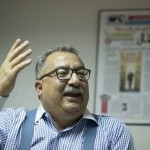
Egyptian journalist and media personality Ibrahim Issa has called for Christian history and culture to be included as part of the nation’s educational curricula, both in social studies and within Arabic language classes.
During his talk show “Hadith al-Qahira” (Cairo Talk) on the “al-Qahira wal Nas” (Cairo and the People) channel on Friday, Issa explained that Egypt’s education curricula does not contain enough references to Coptic history.
The most that gets mentioned is usually monasticism, monasteries, and their participation in the 1919 revolution, he said.
Refusal of the word persecution to qualify the situation in Egypt on the part of the Coptic Orthodox Patriarch
Publication Date: 8/1/2021
Source: Agenzia Fides
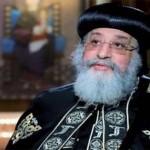
"When I meet the leaders of the world, they always ask me questions about the persecution that is affecting us in Egypt, and I answer that there is no persecution, clearly rejecting this expression to qualify our condition in our country". This is how Coptic Orthodox Patriarch Tawadros II described his reaction to foreign representatives - including political leaders and Heads of State - who, when they meet him, evoke in their conversation formulas and schemes with which the Coptic Christians of Egypt in the "mainstream" media representation , and in general the Christian communities in the countries of North Africa and the Middle East, are systematically labeled as "persecuted minorities".
Are Egypt's Christians Persecuted? Why Some Copts Say No

Author: Paul Marshall
Publication Date: 15/1/2021
Source: Hudson Institute
The religious freedom of and even the number of Christians in Egypt is highly contested.
Last year the U.S. Commission on International Religious Freedom (USCIRF) removed Egypt from its recommended category of “Countries of Particular Concern (CPC),” its list of the world’s worst religious persecutors, but recommended that it be added to the State Department’s Special Watch List (SWL). The SWL list is countries whose governments tolerate or engage in severe religious freedom violations, but do not rise to the CPC standard of “systematic, ongoing, and egregious.”